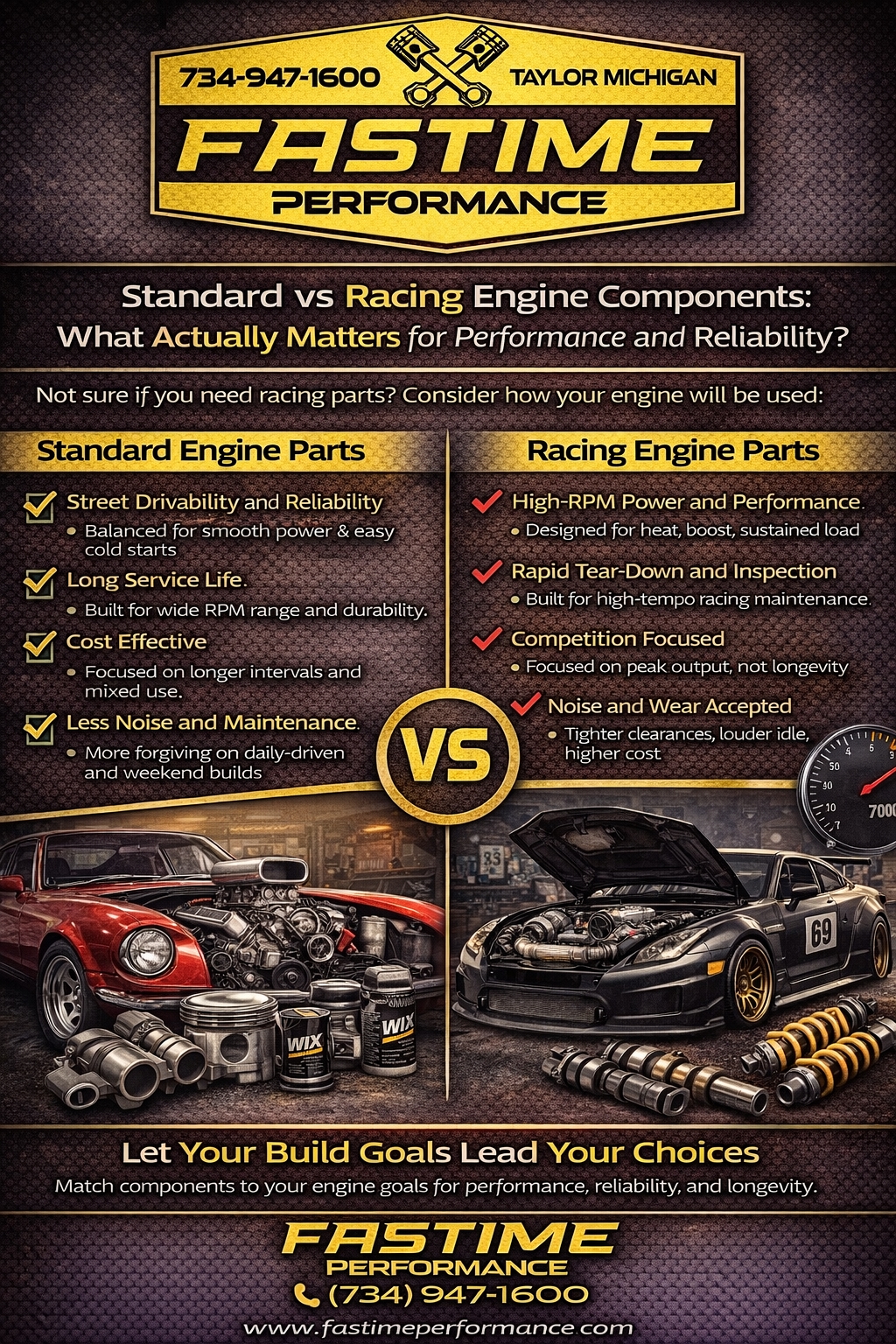
Standard vs Racing Engine Components: What Actually Matters for Performance and Reliability?
Posted January 14th, 2026
Standard vs Racing Engine Components: What Actually Matters for Performance and Reliability?
“Racing” parts sound like the obvious upgrade — but in the real world, the best choice depends on how the engine will be used. Some race-oriented components can deliver real gains at high RPM and sustained load. Others can actually reduce reliability, drivability, and long-term value in a street or weekend-performance build.
At Fastime Performance, we see this all the time: builders spend money in the wrong places, then chase issues that could have been avoided with better part selection and a clear plan. If you’re in the planning stage, start here too:
Top mistakes builders make before engine assembly
What’s the Real Difference Between Standard and Racing Parts?
Most “standard” components are designed for broad use: cold starts, stop-and-go driving, long service intervals, and variable operating temperatures. “Racing” components are typically designed around a different set of assumptions: higher RPM, higher heat, steady operating conditions, and frequent inspection/replacement.
How Manufacturers Define “Racing”
- Prioritizes performance under sustained load: high RPM operation, repeated heat cycles, and aggressive tuning environments.
- Assumes frequent maintenance: shorter service intervals and more frequent tear-down/inspection.
- Often sacrifices comfort and longevity: more noise, higher wear rates, tighter operational windows.
How Standard Components Are Designed
- Balanced durability and performance: suitable for daily driving and mixed-use vehicles.
- Built for wide operating conditions: cold starts, changing temperatures, varying RPM ranges.
- Longer service life expectations: designed for typical street intervals and reliability goals.
If your build plan includes machine work, that decision usually matters more than whether a part is labeled “race.” If you’re unsure what your engine needs, this can help:
Signs your engine needs machine work
Which Components Truly Benefit From Racing Versions?
Some parts really do benefit from “racing” designs — but only when the application matches. The key is to choose components that support your RPM range, power goals, and how the vehicle is used.
Camshafts: Application Matters More Than the Label
A camshaft is one of the biggest “personality” parts in an engine. A race cam can make power up high — but can also kill low-end torque, idle quality, and vacuum in a street build. The correct cam choice should be based on:
- Compression ratio and cylinder head flow
- RPM range and gearing
- Vehicle weight and intended use
- Fuel and tuning strategy
If you’re deciding between profiles, start here:
Choosing the right camshaft for your build
And for a more general breakdown:
Pistons: Strength vs Weight vs Street Longevity
Pistons are another area where “racing” can be a real advantage — especially for high cylinder pressure, boost, nitrous, or sustained high RPM. But the tradeoff is that some race-oriented piston setups can be noisier on cold starts and may require tighter attention to clearance, ring selection, and tuning.
Want the big picture on piston choices and what they change in an engine?
Understanding pistons and how they affect engine performance
Rotating Assembly & Balancing: “Race” Starts With Fundamentals
Before you spend extra on race-labeled parts, make sure the foundation is right. A balanced rotating assembly improves smoothness, reduces bearing stress, and supports higher RPM operation — whether it’s a street build or a competition engine.
How engine balancing improves performance and longevity
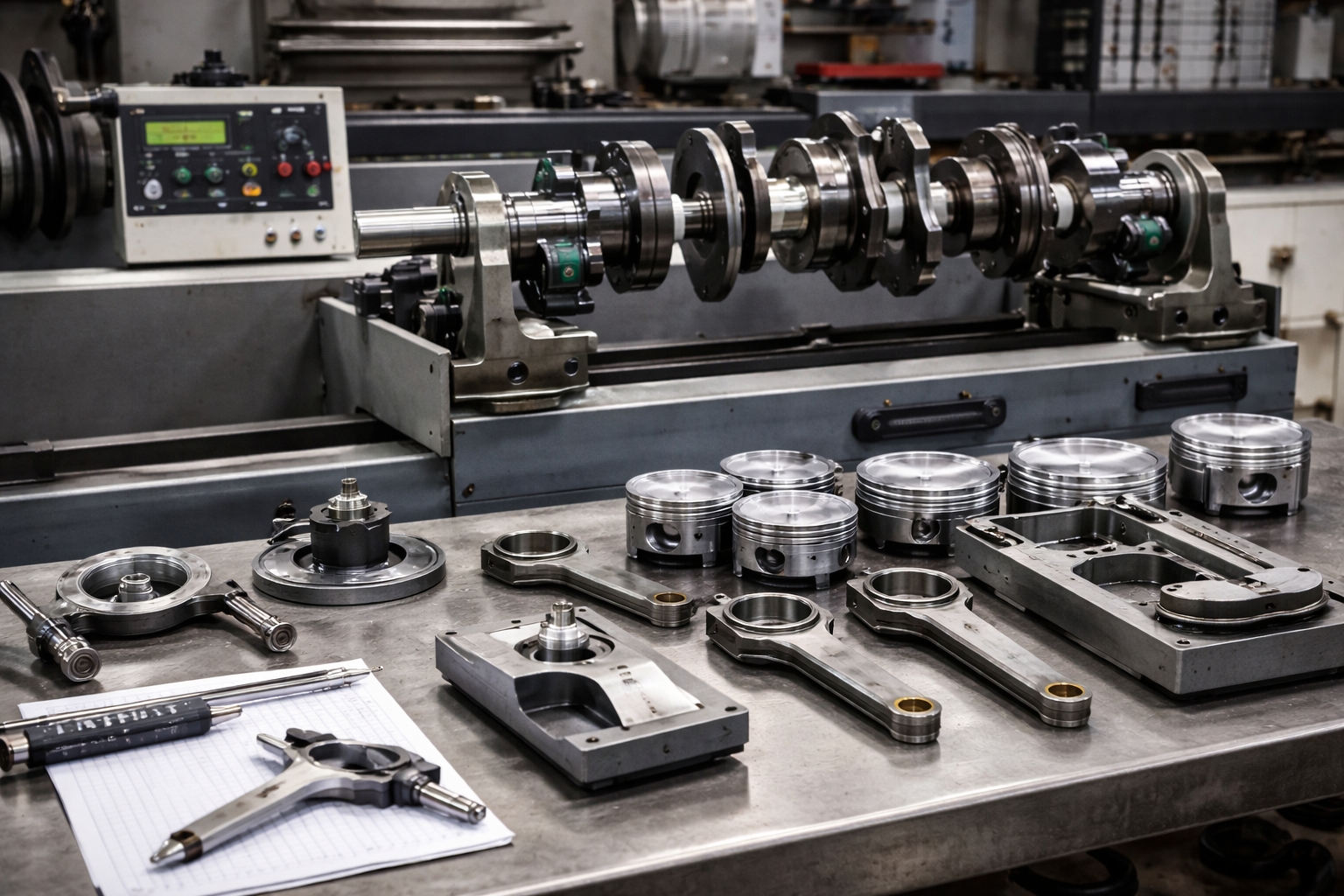
Image: Crankshaft, rods, pistons, and balancing equipment in a machine shop environment.
Oil Filtration: Racing Doesn’t Automatically Mean Better Protection
Oil filtration is a classic area where “racing” can be misunderstood. Racing oil filters often prioritize flow for high-RPM, high-volume systems and assume controlled conditions and frequent changes. Street engines deal with cold starts, wide temperature swings, and longer intervals — conditions that a race filter isn’t always optimized for.
For a detailed breakdown (and an easy way to choose the right option), use this guide:
Understanding WIX oil filters: Standard vs XP vs Racing
Where “Racing” Can Actually Hurt You
Some racing-oriented parts can create issues when the application doesn’t match. The most common problems are reduced service life, increased noise/vibration, and unnecessary stress on other components.
Hardware & Fasteners: Stronger Isn’t Always Smarter
Grade ratings and hardware choices matter — but more isn’t always better. Over-specifying fasteners can introduce brittleness concerns, incorrect torque/stretch behavior, and unexpected failures if the hardware isn’t matched to the joint and its loading.
Here’s a clear breakdown:
Grade 8 bolts in automotive applications: pros and cons
Plumbing & Supporting Systems: Bigger Isn’t Automatically Better
AN fittings and performance plumbing are great when done correctly — but it’s easy to overdo line sizing or create routing issues that cause leaks, inconsistent pressure, or service headaches. Build the system around the engine’s real needs.
Start here:
Understanding AN fittings and why they matter in performance builds
And the companion article:
Understanding AN fittings and how they improve performance plumbing
How to Choose the Right Parts for Your Build
If you want a reliable, powerful engine, your best strategy is to match parts to the application and build goals — not the marketing label.
Match Components to Real Use
- Street: prioritize drivability, cold-start behavior, long service intervals, and consistency.
- Street/Strip: choose “race” parts selectively where they matter (cam profile, piston material, valvetrain durability).
- Drag: parts can be more aggressive; maintenance intervals are typically shorter and operating windows narrower.
- Circle track: sustained RPM and heat management are huge; oiling, cooling, and durability become top priorities.
If you’re comparing engine needs by racing type, this is a great reference:
Circle track vs drag racing engines: what makes them different
Reliability Is a Performance Metric
Horsepower doesn’t matter if the engine can’t survive the operating conditions. Clearances, machine work, balancing, correct oil filtration, and smart component selection win in the long run — especially if you want consistent performance without constant rework.
Final Thoughts
Racing parts absolutely have a place — when the application demands them. But many builds perform better (and last longer) when the budget is spent on fundamentals and the right components for the engine’s intended use.
If you’d like help selecting components for your build — or you’re planning machine work and want to make sure the combination makes sense — contact Fastime Performance. We’re happy to talk through your goals and recommend a direction that matches your application.
Fastime Performance
Taylor, Michigan
Phone: (734) 947-1600
Related Engine Build Resources
- Top mistakes builders make before engine assembly
- Choosing the right camshaft for your build
- Understanding pistons and how they affect engine performance
- Understanding WIX oil filters: Standard vs XP vs Racing
Image: A simple infographic showing where standard parts shine vs where race parts matter most.