ARP Bolts Explained: When They Matter, When They Don’t, and How to Use Them Correctly
Posted January 20th, 2026
ARP fasteners are widely recognized in the performance engine world — and for good reason. In the right application, they provide superior strength, consistency, and reliability compared to standard hardware. However, ARP bolts aren’t automatically the right choice for every engine build.
At Fastime Performance, we regularly see ARP hardware used correctly — and just as often, used unnecessarily. This guide explains when ARP bolts actually matter, where they make the biggest difference, and how to use them properly.
Top mistakes builders make before engine assembly
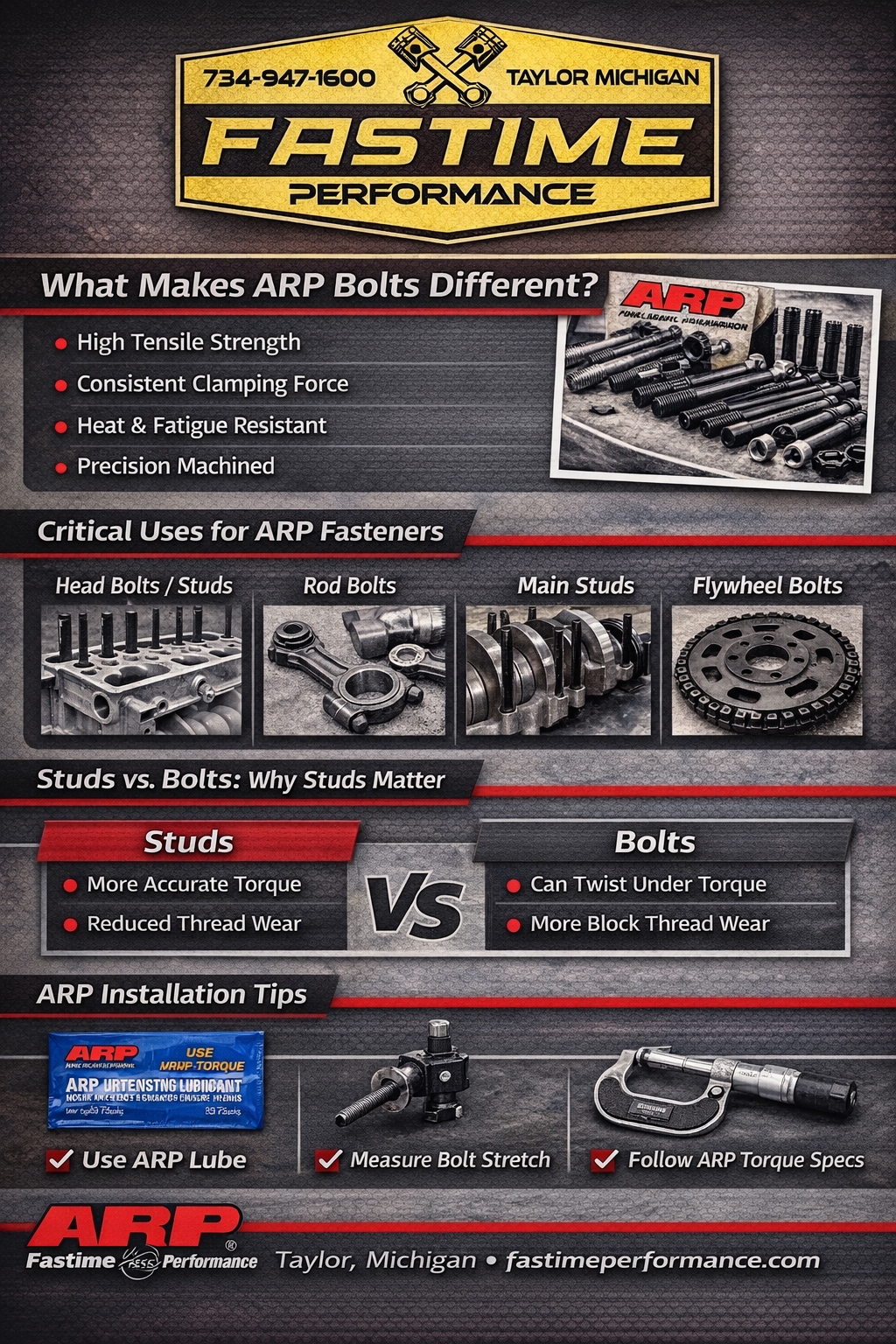
What Makes ARP Bolts Different?
ARP (Automotive Racing Products) fasteners are engineered for consistent clamping force in high-stress environments. Unlike generic bolts, ARP fasteners are manufactured from proprietary alloys with extremely tight tolerances.
- Higher tensile strength than standard hardware
- More consistent torque and stretch characteristics
- Improved clamp load retention during heat cycles
- Precision-machined threads for accurate installation
View all ARP fasteners available at Fastime Performance
ARP vs Standard Hardware: Where the Differences Matter
Not every fastener in an engine experiences the same load. Knowing where ARP hardware provides real value helps you allocate budget where it actually improves reliability.
Critical Fastener Locations
ARP bolts and studs are most beneficial in areas where clamping force is critical:
- Main cap bolts or main studs
- Connecting rod bolts
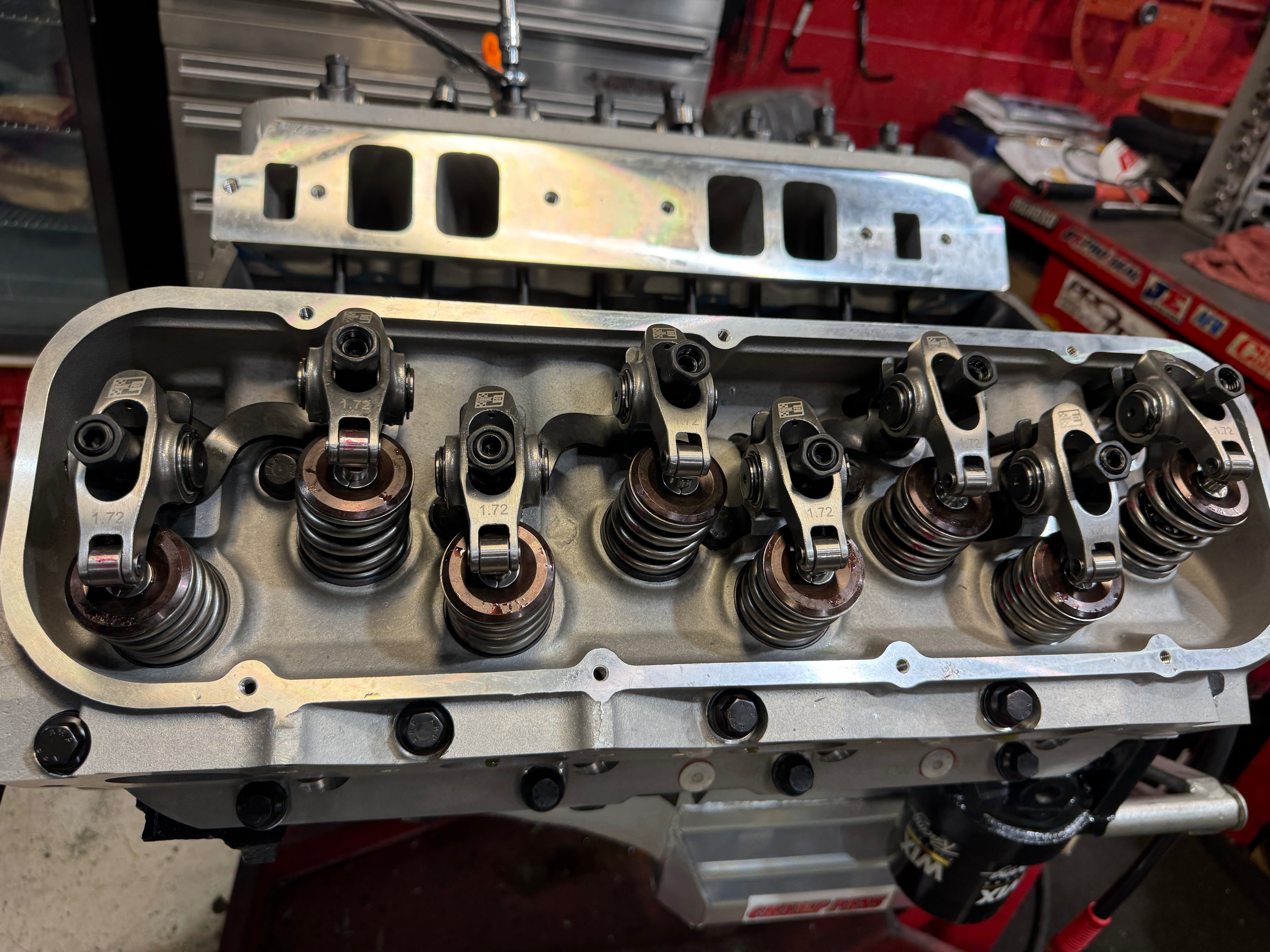
- Cylinder head bolts or studs
- Flywheel and harmonic balancer fasteners
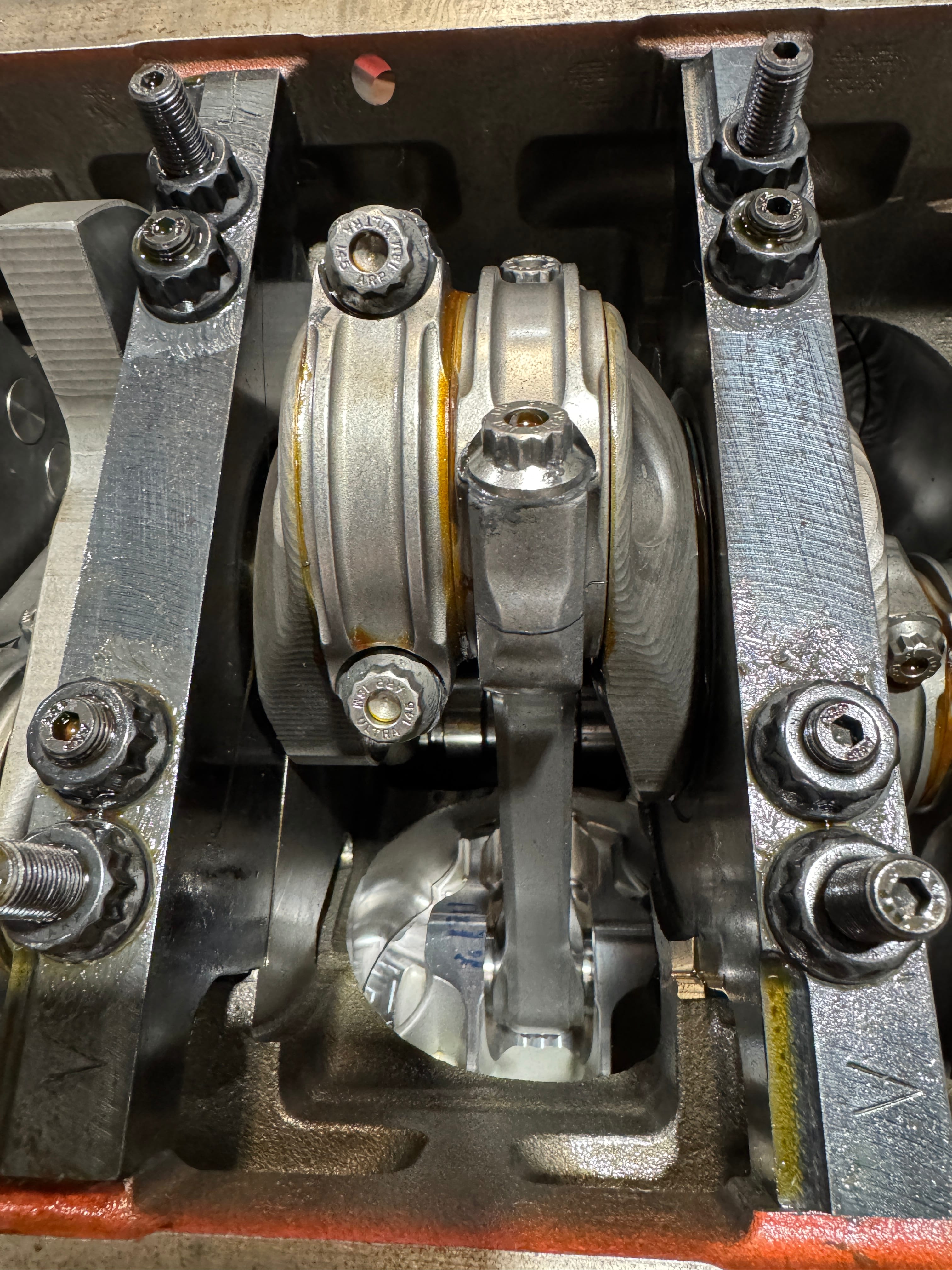
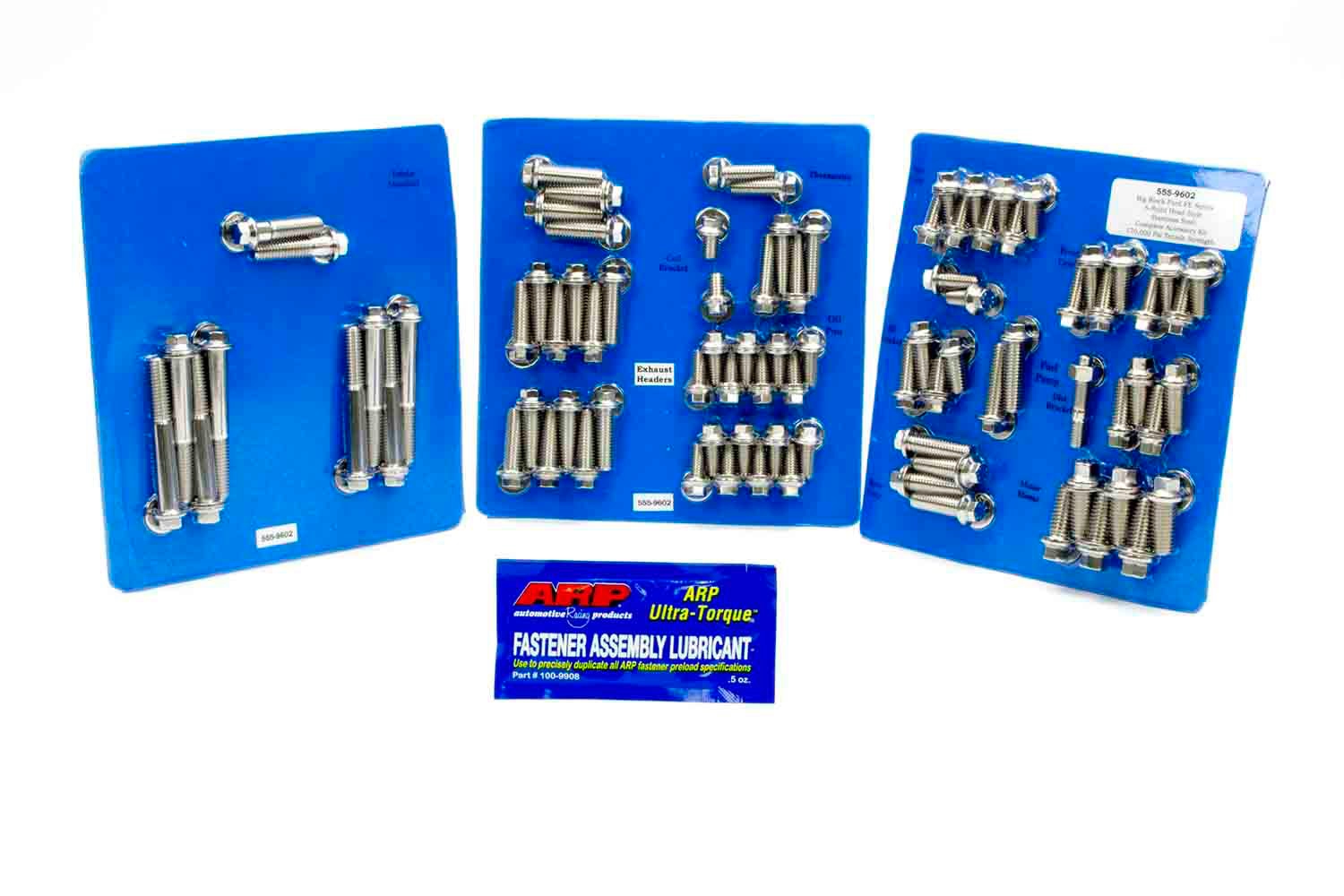
Common ARP upgrades include:
Non-Critical Locations
For brackets, covers, and accessories, ARP bolts rarely provide meaningful benefits. In some cases, they can even complicate torque procedures.
Grade 8 bolts in automotive applications: pros and cons
Studs vs Bolts: Why ARP Often Recommends Studs
Many ARP kits use studs instead of bolts. Studs allow more accurate torque readings, reduce block thread wear, and provide more consistent clamping.
- Improved torque accuracy
- Reduced thread stress in engine blocks
- Better repeatability during rebuilds
Installation Matters as Much as the Fastener
ARP hardware must be installed correctly to perform as designed. Treating ARP bolts like standard hardware is a common — and costly — mistake.
Torque vs Bolt Stretch
Many ARP fasteners are designed to be installed using bolt stretch, not torque alone. Measuring stretch ensures the fastener is loaded correctly within its elastic range.
How engine balancing improves performance and longevity
Lubrication and Torque Specs
ARP torque specifications assume the use of ARP-specified lubricant. Substituting oil or dry torque values can significantly change clamping force.
Do ARP Bolts Increase Horsepower?
ARP bolts don’t directly add horsepower. What they provide is stability, allowing other components to operate safely and consistently.
- Improved bearing life
- Better head gasket sealing
- Higher RPM capability
- Reduced risk of catastrophic failure
ARP Fasteners in a Complete Engine Build
Fasteners are only one part of a reliable engine combination. Proper machine work, correct clearances, and smart component selection matter just as much.
- Signs your engine needs machine work
- Understanding pistons and engine performance
- Choosing the right camshaft for your build
Shop engine fasteners at Fastime Performance
Final Thoughts
ARP bolts are excellent fasteners when used intentionally. Understanding where they matter — and how to install them correctly — helps builders avoid wasted money and prevent failures.
If you need help selecting ARP fasteners for your engine build, contact Fastime Performance. We’re happy to help you choose the right hardware for your application.
Fastime Performance
Taylor, Michigan
Phone: (734) 947-1600
Frequently Asked Questions About ARP Bolts
Are ARP bolts only for racing engines?
No. While ARP is popular in racing, ARP fasteners are also a smart upgrade for many street and street/strip builds—especially when you’re increasing RPM, cylinder pressure (boost/nitrous), or simply want more consistent clamping force in critical areas like heads, mains, and rods.
Do I need ARP studs or ARP bolts?
It depends on the location and your goals. Studs often provide more consistent clamping force and reduce wear on block threads because the stud stays in the block while you torque the nut. Bolts can be perfectly fine in many applications, but studs are commonly preferred for heads and mains when clamp load consistency is critical.
Can ARP bolts be reused?
Often, yes—if they have not been over-stretched, damaged, or overheated, and the application allows it. Always inspect threads and the under-head or washer surfaces. For critical fasteners (especially rod bolts), follow ARP’s guidance and your engine builder’s recommendations.
Should ARP fasteners be torqued dry?
Usually no. ARP torque specs are typically based on using ARP’s recommended lubricant. Using oil or torquing dry can change friction and lead to a different clamp load than intended. Always follow the instructions included with the ARP kit you’re installing.
Is torque enough, or should I measure bolt stretch?
For many critical fasteners—especially rod bolts—measuring bolt stretch is the most accurate way to achieve the correct preload. Torque is an indirect measurement and can vary based on lubrication and surface conditions. If ARP provides a stretch spec, using it is the best practice.
Do ARP bolts increase horsepower?
Not directly. ARP hardware improves reliability and stability by maintaining consistent clamping force. That stability can support higher RPM and cylinder pressure safely, which helps your combination perform consistently without failures.
What are the most important ARP upgrades for a performance engine?
The most common “high-impact” upgrades are typically head studs, main studs, and rod bolts—because those fasteners directly affect sealing, bearing stability, and rotating assembly integrity.
Why did my torque reading feel inconsistent during installation?
Inconsistent torque can come from thread condition, dirty or damaged threads, incorrect lubricant, mismatched washers, or surface irregularities. Clean threads, use the correct lube, and follow ARP’s sequence and steps. If something feels off, stop and verify before proceeding.