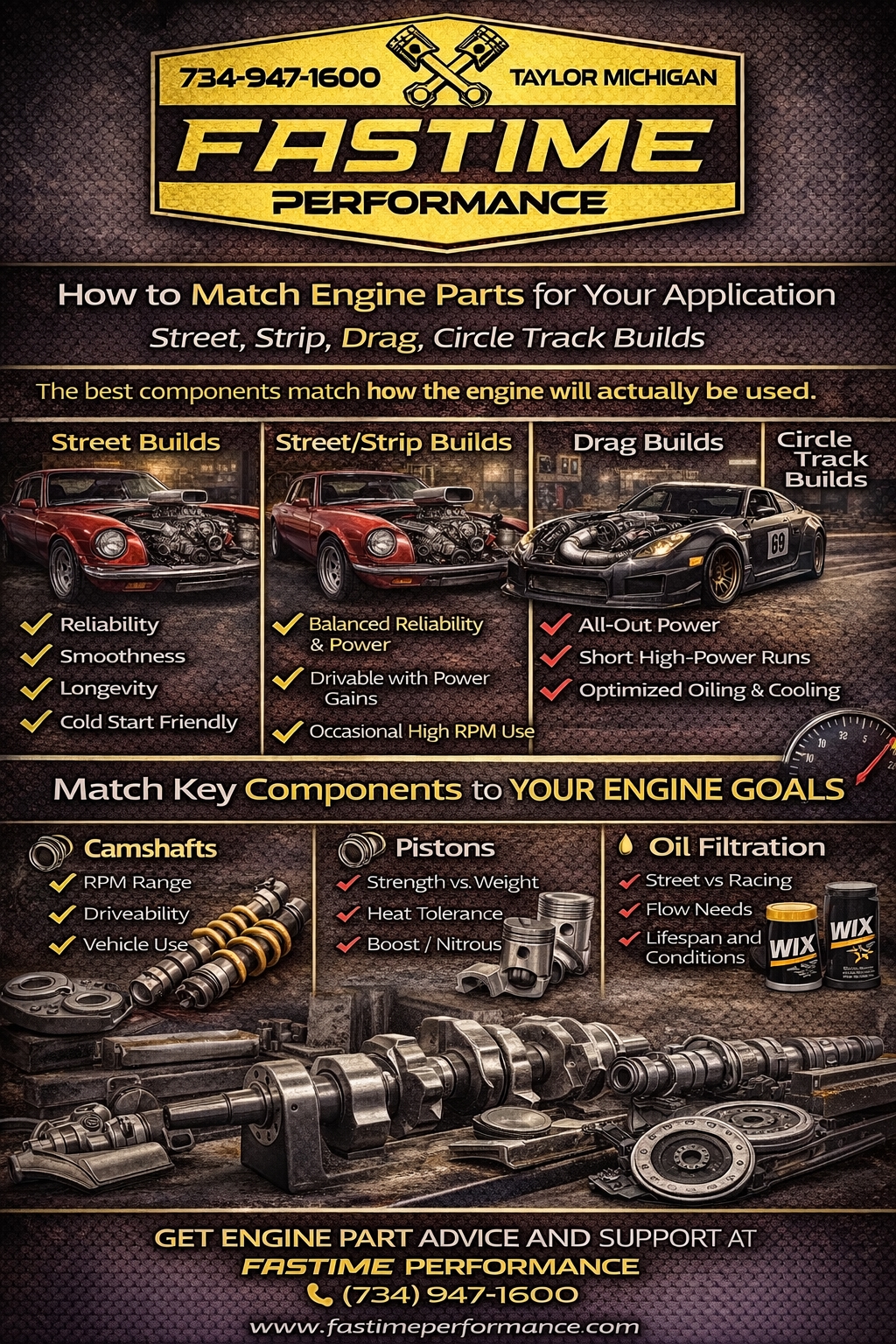
How to Match Engine Parts for Your Application
Posted January 15th, 2026
How to Match Engine Parts for Your Application (Street, Strip, Drag, Circle Track)
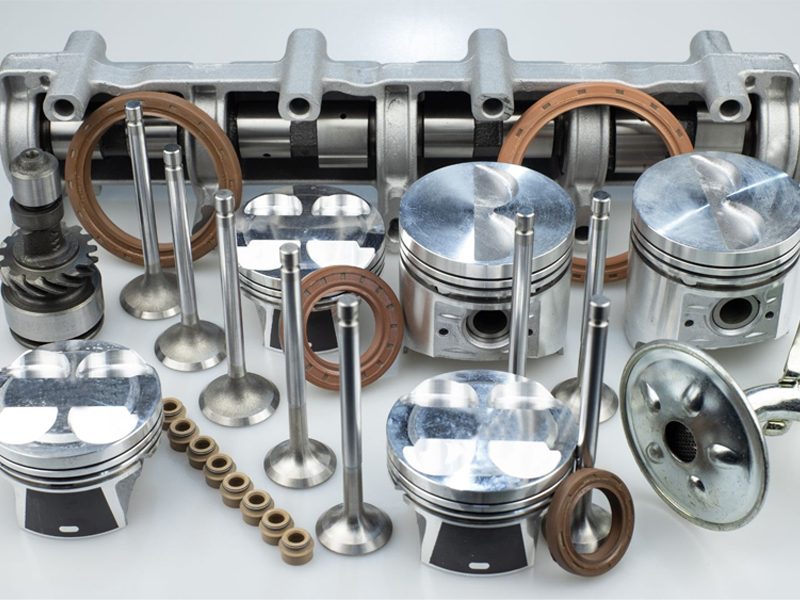
Selecting engine components isn’t just about picking the “best” parts — it’s about choosing the right parts for how you’ll use your engine. A drag racer’s ideal cam, valve train, and oiling setup are very different from a daily driver or a circle track machine.
If you’ve ever wondered why a build that looked good on paper doesn’t perform the way you expected, it often comes down to mismatched component selection. In this guide, we’ll walk through how to align your engine parts with your specific application for better power, reliability, and satisfaction.
Top mistakes builders make before engine assembly
Understanding Your Application: The Foundation of Good Part Selection
Before picking parts, it’s essential to define your engine’s role. Here are the most common use cases:
- Street: Daily or weekend driving with an emphasis on reliability and mpg.
- Street/Strip: Daily driver with occasional trips to the drag strip.
- Drag Racing: Short, high-power runs where peak torque and horsepower matter most.
- Circle Track: Sustained high RPM, repeated heat cycles, and balanced performance.
Each application places different demands on your engine — and your components need to match those demands.
Street Builds — Balance and Longevity
For street engines, consistency and reliability trump peak performance. Your build should:
- Deliver smooth idle and acceleration
- Resist wear during varied temperature and load
- Require minimal maintenance for long intervals
Consider starting here:
Camshaft selection for your build
How pistons affect engine performance
Street/Strip — A Mix of Daily Use and Weekend Fun
Street/Strip builds demand a blend of reliability and top-end performance. Components should provide:
- Improved power without sacrificing driveability
- Tolerance for occasional high-RPM use
- Compatibility with your chosen fuel and tune
Prioritize parts that build on street reliability but open the engine to higher output — like carefully chosen cam profiles and balanced rotating assemblies:
Drag Racing — Power and Peak Performance
Drag engines are all about one thing: maximizing power in a short burst. This means:
- High-lift cam profiles
- Strong, lightweight rotating components
- Optimized oiling and cooling
Components often lean more toward “race-intent” designs here, but they must still work together as a system. Choosing the right setup involves:
Drag vs Circle Track engine differences
Circle Track — Sustained RPM and Durability
Circle track engines see high RPM for extended periods. They need:
- Balanced rotating assemblies
- Efficient oil and cooling systems
- Valvetrain stability at high rpm
Because this application pushes components for long durations at speed, reliability and heat management become as important as peak horsepower:
Matching Specific Components to Your Use
Now that you know the categories, let’s talk about how key components should be matched to applications:
Camshafts — More Than Just Power Numbers
Cam choice affects vacuum, idle quality, and torque curve — not just peak power. Match the cam’s profile to your intended RPM range and vehicle use:
Choosing the right camshaft for your build
Pistons — Strength, Weight, and Heat Tolerance
Piston choice affects how an engine responds to heat load, compression, and detonation thresholds. For short, high-power runs you may prioritize lightweight forged pistons. For street use, cast or mild forged pistons often deliver longer service life:
Understanding pistons and performance
Oil Filtration — Your Engine’s Lifeline
A well-matched oil filtration system supports your engine’s needs based on how it will be used. Street engines benefit from dependable filtration across varied conditions. Race engines benefit from designs that support high flow at high RPM:
Standard vs Racing oil filters
Final Thoughts — Build With Purpose
Your engine is only as good as the parts you choose and how well those parts support what you actually do with the vehicle. Choosing parts based on marketing labels alone often leads to mismatches that hurt performance, reliability, or both.
If you need help defining the best parts for your build — whether it’s street, drag, strip, or circle track — contact us. We’ll help you make choices based on experience and real-world results.
Fastime Performance
Taylor, Michigan
Phone: (734) 947-1600
Related Content
- Top mistakes builders make before engine assembly
- How engine balancing improves performance and longevity
- Drag vs Circle Track engine differences
- Choosing the right camshaft for your build